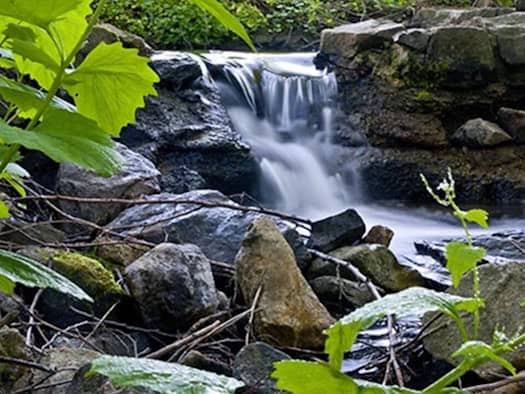
Project for better water quality in Lusatia
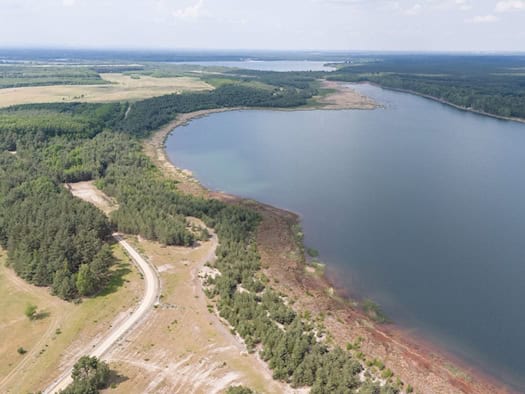
2.7 million euros for near-natural rivers: A new project is testing how the condition of rivers and streams in the lignite mining region can be improved.
Nachrichten werden geladen...
2.7 million euros for near-natural rivers: A new project is testing how the condition of rivers and streams in the lignite mining region can be improved.
The environmental association Ökolöwe warns against motorboats on other lakes in Leipzig. What the environmentalists fear and what the state directorate of Saxony thinks.
Every year, thousands of tons of plastic film are left behind in Europe's fields, polluting the soil with microplastics. Together with European partners, the Fraunhofer FEP in Dresden is developing an innovative solution: mulch films made of cellulose that decompose themselves after harvesting. Particularly clever: special structures channel water directly to the plants and are intended to quadruple water use.
High concentrations of particulate matter are causing problems in Saxony: The limit values are currently being exceeded in many cities. Will rain and snow soon ease the situation?
Several regions in Saxony are considered particularly suitable sites for nuclear waste according to the Federal Company for Final Disposal. The State Environment Agency has now published a statement on this.
After a good harvest, an agricultural business from Frohburg is left with around 4,000 tons of potatoes. The food banks in Saxony benefit from this.
Poland and the EU Commission are in dispute over millions withheld. The highest court of the European Union has now ruled on the matter.
Many people will remember the summer of 2025 as rather rainy. But over the year as a whole, it was too dry in Saxony. The Free State lacks the classic "country rain".
After a good harvest, an agricultural business from Frohburg was left with around 4,000 tons of potatoes. The crops are now being distributed.
Buffer or soup? Many Berliners will be asking themselves this question more often now. Tons of potatoes have arrived from a rescue operation in Saxony and need to be distributed and processed.

A farm from Frohburg was left with around 4,000 tons of potatoes. Part of the harvest is now to go to food banks in Saxony and Thuringia.
More forest for Saxony: Why the state government and the Forest Foundation are focusing on reforestation and which regions are particularly in focus.
Saxony's CDU wants to prevent forests from being cleared for solar power plants nationwide. According to media reports, a corresponding motion is planned for the CDU party conference.
Substances that are considered harmful to health have been discovered in several bodies of water. The contamination is considered to be localized. It remains unclear where the chemicals come from.
From smartphones to electric cars, lithium is in high demand as a material for batteries. In the future, it could also be mined in the Ore Mountains. Such a mine promises new jobs, but also raises concerns.
4,000 tons of potatoes are currently stored at a farm near Leipzig. The "Berliner Morgenpost" newspaper and the search engine Ecosia now want to have them distributed free of charge in Berlin.
The owner fought against the deforestation of her woodland right up to the end. But she was unsuccessful in court.
A forest near Rohne is to make way for the Nochten open-cast mine. The excavators could be rolling as early as the beginning of January. What happens now?
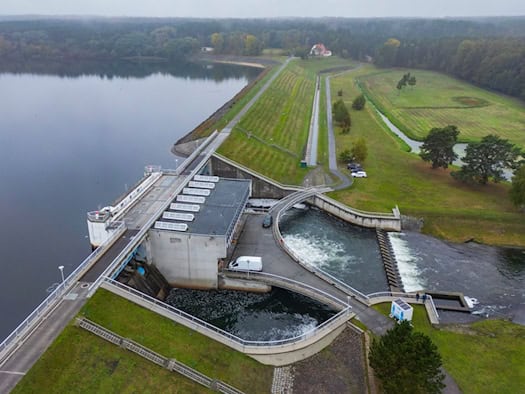
The state dam administration continues to invest in flood protection. Climate change is becoming a challenge for the future.
The forest in Saxon Switzerland should be diverse and stable despite climate change: Foresters have planted a total of 165,000 trees and shrubs for this purpose in 2025.
Why the court rates the public interest in electricity supply higher than climate protection - and why coal mining can continue in eastern Saxony.
A new hiking trail is to connect Bohemian Switzerland and Saxon Switzerland. The route is due to be inaugurated in spring - but it can already be tested now.
This year's EU direct payments will soon end up in the accounts of around 7,000 farms. However, they could be cut in future. Saxony's Minister of Agriculture considers this to be a fatal signal.
Where companies invest and jobs are created in the future also depends on the expansion of the hydrogen network. In Saxony, the expansion of the grid is making progress - 2026 is considered a key year.
Less disturbance for peregrine falcons and co.: the ban on overnight stays in the national park during the breeding season will continue to apply in future. Saxony's environment minister sees this as a benefit for nature.
Billions are already being invested in the electric revolution - but new EU plans could cause confusion. What Economics Minister Panter is now demanding for Saxony's car manufacturers.
Lusatia is to become a European role model for green industry. The Saxon Minister of Economic Affairs speaks of a "historic opportunity".
Substances that are considered harmful to health have been discovered in several bodies of water. The state capital has taken initial measures and is now looking for the cause.
Fast approvals and a pioneering spirit: Lusatia wants to become a role model for green industry in Europe. Alongside a spirit of optimism, there are also critical voices.
If things go well for the bark beetle, one female can give rise to 100,000 beetles in three generations. However, 2025 was not a good year for the pest in Saxony.
Wind and sun are setting records, but alternatives are needed when there is a lull. Why biogas is now in demand as a wild card in the electricity mix - and where new billions are flowing.
Difficult site conditions are a burden for many farms in Saxony. New subsidies are intended to secure their management and enable measures for more biodiversity.

A forest owner in eastern Saxony wants to take his case to the Federal Constitutional Court. He is fighting against the expropriation of his land for opencast lignite mining.
Slurry and liquid manure end up in Saxony's waters, but there are no consequences. Why former Environment Minister Günther is now pushing for tougher penalties and stricter controls.
New premiums from 2026 should make e-cars more attractive for more households in Saxony. However, uncertainties regarding electricity prices and charging infrastructure remain an issue.
A pond owner was annoyed by the damage and wanted to get rid of the animals. Permission to relocate the animals had been granted. However, the administrative court found that the requirements for this had not been met.
Almost 27,000 raccoons were shot in Saxony in the current hunting year. The animals are spreading rapidly - with consequences for the local wildlife.
Leag is building a huge electricity storage facility in Boxberg, Saxony, together with a Chinese energy storage provider and Siemens Energy. The facility is intended to compensate for fluctuations in renewable energies.
The German government may compensate the energy company Leag for its coal phase-out with a billion-euro sum. The EU Commission does not consider the funding of up to 1.75 billion euros to be a breach of EU state aid rules, as the authority announced in Brussels.Copyright 2025, dpa (www.dpa.de). All ..
After decades, more salmon are returning to Saxony. But the return remains fragile: construction work, heat and low water levels are making life difficult for the fish.
The wolf population in Germany is stagnating at a fairly high level. Most of the animals live in Lower Saxony and Brandenburg.
After a tree survey, it is clear that the second old copper beech tree in Pillnitz Castle Park will also be felled. What this means for visitors and the park.
Moose are repeatedly spotted in eastern Germany. But are they here to stay? What experts say about the return and habitat of the animals that once lived all over Germany.
According to the Federal Company for Final Disposal, several regions in Saxony are considered particularly suitable sites for nuclear waste - how will the selection process continue?
The wolf hotline in Saxony will only be available to a limited extent at night in future. However, direct contact will still be possible in urgent cases.
Traffic, poaching, territorial warfare: 240 dead wolves have been found in Saxony in 25 years. Most of them died in road traffic.
The award, presented by the Federal President, is one of the most highly endowed environmental prizes. This year, an innovative galvanizing process and research into the climate system are being honoured.
The work of the forestry trainees at Sachsenforst has paid off: 1,400 kilograms of acorns will soon be used to grow new trees in Saxon Switzerland.
Is there still enough habitat for animals like the lapwing or the partridge in Saxony? Species extinction is also taking place in this country. That's why expertise is needed.
The Capital of Culture celebrates the apple: even more tree plantings, a varied program of events and a contribution to biodiversity characterize the "Harvest" planting festival.
The partridge is the bird of the year 2026, but in Saxony it is difficult to find the animals outdoors. This is because they only live here in isolated numbers.
Mushroom lovers have to be patient in Saxony: The yield is meagre, but experts are hoping for late fall. Meanwhile, a mushroom from North America is causing a stir.
Brownfield sites leave their mark. The soil there is often contaminated with pollutants. In Dresden, a new start is planned for one such site.
More hamsters on arable land in Saxony: That is the aim of a new EU-funded project. This is how to get the rodent offspring to thrive.
For the first time, Saxony's organically farmed areas exceed the ten percent mark. Some regions in particular are considered "hotspots". However, the demand for organic remains greater than the supply.
Drought, heat and pests are taking their toll on forests. Why mixed forests are considered more resilient and how new data should help with protection.
More than 900,000 hectares of forest have been lost in Germany since 2017. Drought, storms and pests also affect popular hiking regions. Which regions are affected in Saxony?
How can new parks and water areas save the urban climate? Municipalities have the chance to receive state funding - and citizens benefit directly from the model projects.
Saxony's forests are set to play an even greater role in the future as a source of timber, a habitat for endangered animals and plants and a recreational area for people. But the area is shrinking.
Sachsenforst largely renounces FSC certification. Environmental associations and the Greens criticize: The decision is a step backwards for sustainable forest management.
Cycling into the center of Leipzig - without traffic lights and traffic. This is one of the visions of the "Parkbogen Ost" project. An important construction phase is now underway. But question marks remain.
From birds to hamsters: the new data on the south-east link documents around 330 protected species along the planned power line.
A new hiking trail is to connect the national parks in Germany and the Czech Republic from 2026. What can visitors expect on the route?
Vacationers could soon be relaxing where excavators once worked: The tourist use of Lake Seelhausen is taking shape - but not without hurdles.
The legacy of the uranium mining company Wismut is to be reappraised and exhibited at two locations. This has been a long time coming. However, it is now clear that the plans need to be scaled back.
Who drives clean, who drives dirty? The new environmental balance sheet from Deutsche Umwelthilfe shows that Saxony's ministers are a mixed bag when it comes to CO2 emissions.
The consequences of the acid rain at the end of the last century are still measurable in the forest soils in Saxony. Lime is now being spread again to improve the situation.
Reach out to the paw: The German Federation for the Environment and Nature Conservation calls for the protection of the European wildcat and shows how everyone can help.
The Elbe between nature conservation and shipping: for the Greens, it is clear where the path should lead in view of declining cargo handling. Towards more nature conservation and tourism as an economic factor.
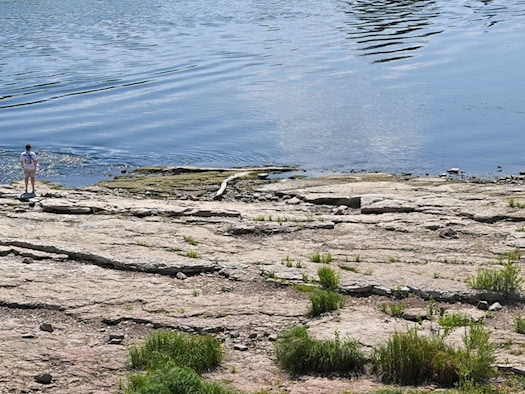
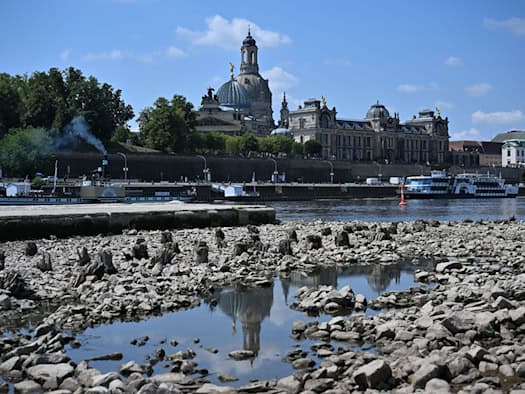
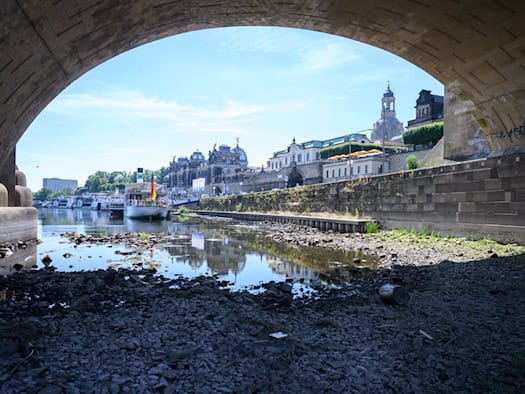
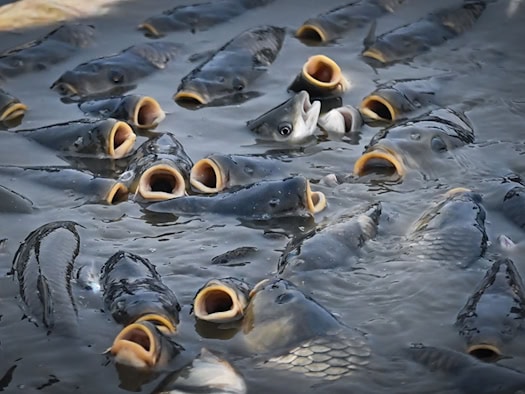
Low water levels and persistent drought are an increasing threat to the flora and fauna in water bodies. Unfortunately, thunderstorms and sporadic rainfall have hardly brought any relief.
Wolf monitoring shows three completely new territories. In other parts of the state, known pairs of wolves have grown into a pack. Saxony's wolf region par excellence remains Upper Lusatia.
Forest areas are to be used for the expansion of wind power and photovoltaic systems - a classic conflict of interest. Because nature is also being destroyed in the process.
The Elbe is reaching historically low levels - and, according to environmentalists, is becoming increasingly unusable for freight transport. They are now calling for a radical rethink of waterway policy.
The introduced ant species Tapinoma magnum is being discovered in more and more places in Germany. Until now, it was more common in the southwest. Now it is also appearing in Saxony.
It has been too dry in Saxony for a long time. Streams and rivers have low water levels. That is why the city of Dresden is now responding.
In May and June, the experts observed an intensive swarming flight of the pests. However, there has been no major damage so far. What are the reasons?
Due to the high risk of forest fires, only diesel locomotives have been running on the Brocken recently. Now travelers can look forward to steam locomotives again.
The invasive species transmits crayfish plague, which is fatal to native animals. The Natural History Museum warns of far-reaching consequences.
The introduced ant species Tapinoma magnum is being discovered in more and more places in Germany: until now, it was more common in the south-west. Now the first evidence has also been found in eastern Germany.
The Free State of Saxony is supporting 88 pond farms with around 4.3 million euros. The funds are intended to counteract the increasing drought and enable sustainable pond maintenance.
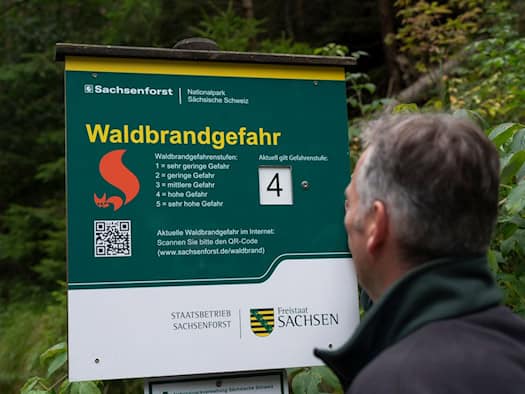
Little rain, high temperatures and wind have dried out the soil in Saxony's forests. Special care is required when visiting.
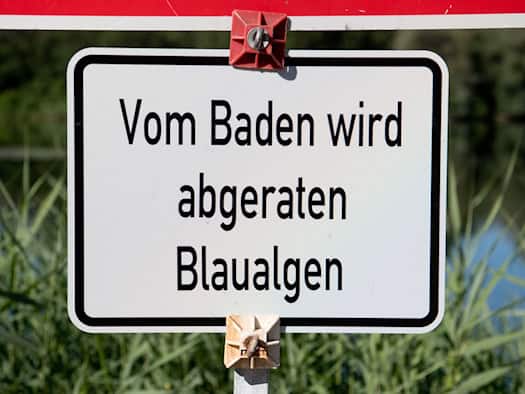
Dangerous blue-green algae have been discovered in the Quitzdorf reservoir. Streaking and cloudy water indicate the presence of bacteria.
The environmental organization warns: The Leag split-up threatens to cost Saxony and Brandenburg billions. It is now calling for the two state governments to intervene.
It is still unclear what is behind the oily or slimy trace. A suspicion of blue-green algae was not confirmed.
Little rain and high temperatures in spring: many rivers in Saxony already have little water.
Sugar beet and potatoes in particular are at risk of crop losses. The southwest in particular has been affected so far, but the Free State is also preparing itself.
Air quality in the country deteriorated last year. This was due to Saharan dust and unfavorable weather conditions in winter.
Too much concrete, too few trees: cities can become a sauna in summer. The "heat check" by Deutsche Umwelthilfe shows where it heats up the most - and where the least.
More than three decades ago, lignite was still being mined in the Borna-Ost/Bockwitz open-cast mine. Today, water buffalo, cattle and Boer goats graze there. An educational trail now provides information about grazing.
Walkers and cyclists beware: The hairs of the oak processionary moth can cause skin rashes. In many places, the pest is controlled with tiny threadworms.
In many regions of Germany, the groundwater is too heavily contaminated with nitrate. This also applies to Saxony - where the problems are particularly severe.
Germany wants to be climate-neutral by 2045 and not emit more greenhouse gases than can be stored again. According to Saxony's head of government, this is too early.
Once the "death strip", today the former German-German border is considered a biotope. Insects are now to be recorded along the Green Belt - this should also help with an application.
The message for International Biodiversity Day sounds depressing. According to estimates, 150 species become extinct every day. Species extinction does not stop at Saxony either.
The phasing out of coal mining in Lusatia and climate change threaten to cause major changes to the water balance in the region. Stabilizing the hydrology is the task of several studies.
Mountain meadows and trees in the Eastern Ore Mountains are endangered by climate change and recreationists. In addition to state investment in the necessary forest conversion, civic engagement also helps.
A state agency in Saxony unseals old industrial ruins, renaturalizes streams or creates habitats for animals. Municipal or private developers can buy the eco-points gained in this way.
Saxony is forced to make savings. This applies to all departments. For the new Minister of the Environment and Agriculture, however, the glass is not half empty, but half full. He also sees the coming period as an opportunity.
The national park is one of the most popular excursion and tourist regions in Bavaria. Over 9,000 hectares of flora and fauna are protected. Details of the work can be found in the new annual report.