Free Voters call for local authorities to have veto rights over wind power
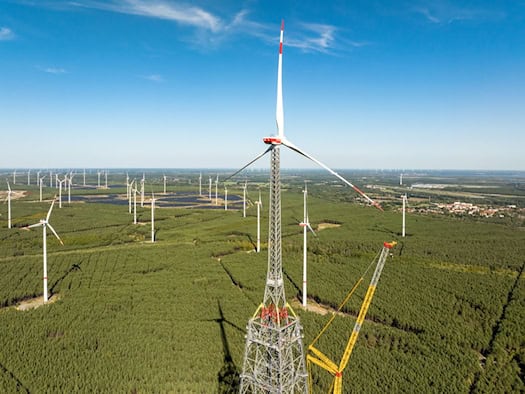
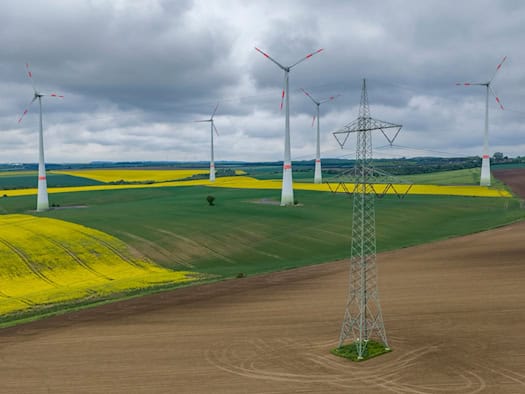
According to the Free Voters, the expansion of wind energy in eastern Germany is facing an acceptance crisis. They are therefore calling for local authorities to have a say.
Messages are loaded...
According to the Free Voters, the expansion of wind energy in eastern Germany is facing an acceptance crisis. They are therefore calling for local authorities to have a say.
How does VNG assess the current situation in the gas storage facilities? The company does not see any acute danger, but warns of challenges for the next season.
Researchers at Zwickau University of Applied Sciences are developing an innovative hydrogen engine that emits hardly any pollutants. With three million euros in funding from the Free State of Saxony and the EU, a drive system for ships, power plants and construction machinery will be created by 2027. The special feature: The engine is designed from the ground up for hydrogen and operates almost emission-free even without an exhaust catalytic converter.
Saxony premiere with a two-year delay: a battery-powered train now regularly connects the two cities. It is gradually replacing the diesel locomotives on the line.
How much are heating costs really rising in Saxony? Why it's particularly worth taking a look at your bills and your own consumption behavior now.
Two years of delay, but now the time has come: 300 seats, double traction and a premiere for Saxony. Next week, the first battery-powered train will carry passengers between Leipzig and Chemnitz.
A new electrolyzer is to produce green hydrogen from renewable energies in future. The project is a further step in the establishment of one of four German hydrogen centers in Chemnitz.
Several regions in Saxony are considered particularly suitable sites for nuclear waste according to the Federal Company for Final Disposal. The State Environment Agency has now published a statement on this.
Poland and the EU Commission are in dispute over millions withheld. The highest court of the European Union has now ruled on the matter.
Playing your way to the energy transition: A new junior research group at the University of Applied Sciences Zwickau is investigating how gamification can help with technological change. Among other things, the researchers are developing an "Energy Tamagotchi" that makes electricity consumption visible and a digital driving trainer for energy-efficient driving. The interdisciplinary team aims to develop practical concepts for business and society by 2028.
The Saxon wind farm is the oldest in Germany. The Free State contributes around 1.2 percent of new capacity to the construction of new turbines - one of the lowest figures ever.
Cold snaps and higher prices are leading to higher heating costs in Saxony. How badly different types of heating are affected and what an energy service provider predicts.
Saxony's CDU wants to prevent forests from being cleared for solar power plants nationwide. According to media reports, a corresponding motion is planned for the CDU party conference.
High energy prices and climate protection - hydrogen is supposed to solve both problems. But the technology is expensive. Four Saxon universities are now developing fuel cells that can be reused. The "Hy²Cycle" project could advance the energy transition.
Emergency power keeps operating theaters and intensive care units running - but what happens if the blackout lasts longer? Saxony's hospitals reveal where the limits lie.
Solar expansion is booming, domestic production is dying: Following the closure of the last major solar producer, Germany is faced with the question of where the German solar industry is heading.
Where companies invest and jobs are created in the future also depends on the expansion of the hydrogen network. In Saxony, the expansion of the grid is making progress - 2026 is considered a key year.
Lusatia is to become a European role model for green industry. The Saxon Minister of Economic Affairs speaks of a "historic opportunity".
Fast approvals and a pioneering spirit: Lusatia wants to become a role model for green industry in Europe. Alongside a spirit of optimism, there are also critical voices.
Wind and sun are setting records, but alternatives are needed when there is a lull. Why biogas is now in demand as a wild card in the electricity mix - and where new billions are flowing.
They see the future threatened by climate-relevant energy sources and therefore want to literally take to the streets - road users in Dresden should plan to do so on Thursday.
The HZwo industry network is driving forward hydrogen technologies. The Free State of Bavaria has now secured follow-up funding until 2028. These are the goals.
After a loss of around 138 million euros, biofuel producer Verbio is once again optimistic about the new financial year. What the Management Board says about the market recovery and the planned return to the SDAX.
Saxony's Prime Minister criticizes the EU's withdrawal from Russian gas. He considers the decision to be symbolic politics.
The eastern German states want to benefit from green hydrogen together. A study is to show how municipalities and industry can catch up.
If a light on Steffen Flämig's candle arch is broken, he has to go up to lofty heights. Because his candle arch shines high up on a wind turbine. It is switched on at the weekend.
Leag is building a huge electricity storage facility in Boxberg, Saxony, together with a Chinese energy storage provider and Siemens Energy. The facility is intended to compensate for fluctuations in renewable energies.
The German government may compensate the energy company Leag for its coal phase-out with a billion-euro sum. The EU Commission does not consider the funding of up to 1.75 billion euros to be a breach of EU state aid rules, as the authority announced in Brussels.Copyright 2025, dpa (www.dpa.de). All ..
Despite drastic restrictions on imports, Russian gas is still flowing into Germany. Left Party leader van Aken is calling for an end to this. The reason for this is a statement by Saxony's head of government Kretschmer
Anyone who uses solar systems with neighbors or in a club can now collect subsidies in Saxony. Up to 200,000 euros in support is possible. But only if at least two parties benefit.
Several eastern German energy suppliers are reducing their prices from 2026, with others set to follow suit. Who can look forward to lower costs? And how much can customers save? An overview.
According to the Federal Company for Final Disposal, several regions in Saxony are considered particularly suitable sites for nuclear waste - how will the selection process continue?
From 2026, many EnviaM customers will pay less for electricity, gas and heating energy. However, the supplier warns of price fluctuations in the future.
Clothes, furniture and restaurant meals cost more, but heating costs are falling. What does this mean for inflation - and for your wallet?
Germany's largest solar thermal plant in Leipzig is almost complete. Pipes will soon be laid to connect it to the district heating system. What will the plant achieve from 2026?
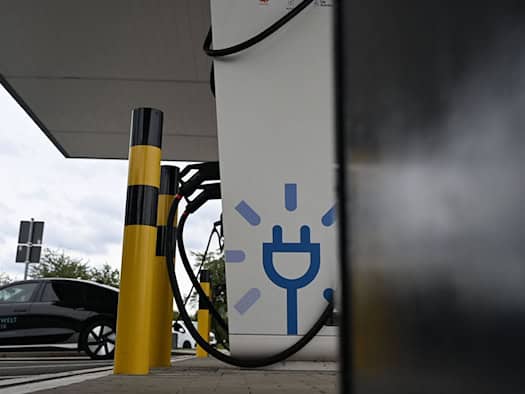
Electromobility is set to pick up speed. Above all, this requires charging stations. In Klipphausen near Dresden, cars can be "refueled" with green electricity in a short time.
Solar modules on trucks and buses can supply electricity for refrigeration units or air conditioning systems. They are manufactured in Saxony.
Waste heat from Leuna is to supply around 100,000 Leipzig households with heat in future. The pipes for this will be manufactured in Sondershausen and delivered ready for installation.
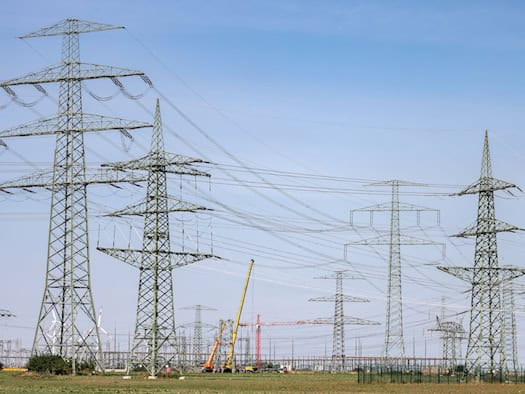
Two and a half years of construction, millions invested, kilometers under high voltage: more electricity from wind and sun is now flowing between Leipzig and Erfurt.
40 percent more electricity, primarily from renewable energies: A central power line is being put into operation in Vieselbach near Erfurt to make the grid more stable and efficient.
The Swiss stock exchange is ending trading in Meyer Burger shares. The last trading day for the securities of the insolvent solar manufacturer has been set.
Mitteldeutsche Regiobahn wants to replace diesel operation with the new battery-powered train. Training and test runs between Leipzig and Chemnitz are scheduled first.
Solarworld was once Germany's largest solar module manufacturer. Insolvency came in 2018. But the rights to the brand are still worth something today.
The East German Minister Presidents are in favor of new rules for the expansion of wind power. The chambers of industry and commerce consider this to be the wrong signal.
How Görlitz and Zgorzelec want to convert their district heating systems together - and why the new funding decision is crucial for the project, according to the mayor.
The employees of Thyssenkrupp in Chemnitz and Hohenstein-Ernstthal had bad premonitions. Now it is certain: the company is closing the sites with 270 employees.
Until now, the waste heat from the TotalEnergies refinery in Leuna has not been used. This is soon to change. Many thousands of households are to be supplied via a new connection to Leipzig.
The biofuel manufacturer Verbio earned significantly less last year, but sees opportunities for a quick recovery. Why the Executive Board still wants to suspend the dividend payment.
Large parts of the economy in Saxony depend on the automotive industry. But it is struggling with sales problems. Southwest Saxony is tackling the transformation and can count on millions in aid.
The federal government is investing up to 290 million euros in four large hydrogen centers. The first has now opened in Chemnitz. Here, companies receive help to test new products and bring them to market maturity.
Families and colleagues take to the streets together: Why 270 Thyssenkrupp employees fear for their future and what IG Metall is now demanding.
The Swiss mechanical engineering company Meyer Burger had set out to revive solar production in Germany. But in the face of massive competition from China, the plan has failed.
The Leipzig Chamber of Industry and Commerce warns: fewer wind power areas could slow down investments - and make electricity more expensive for companies and consumers.
The government's wind power plans are met with both approval and criticism: while local authorities benefit, the Greens see the energy transition at risk.
Up to 10,000 people in Leipzig without electricity: traffic lights even failed in parts of the city center. According to the municipal utilities, the cause is probably a technical fault.
More money for municipalities, but higher costs for wind turbine operators: what this means for the energy transition in Bavaria.
From birds to hamsters: the new data on the south-east link documents around 330 protected species along the planned power line.
Wind turbine operators are to pay affected municipalities in Saxony more money from 2026. The issue is now being discussed in the state parliament. Opinions differ.
Saxony's wind power is still in its infancy - why local authorities are now making a profit and what this means for local acceptance.
The expansion of wind power in Saxony is making slow progress. Now the financial incentive for local authorities is to be improved.
Production comes to a standstill, hundreds lose their jobs. The lights are going out at solar cell manufacturer Meyer Burger. The last hope is ongoing talks with interested parties.
The keyword in Lusatia is structural change. An industrial location that is now celebrating an anniversary is also experiencing this.
A medium-sized company in eastern Saxony specializes in the recycling of bicycle batteries. The Free State of Saxony is supporting a new repair center.
Around a third less electricity was generated from lignite in Saxony in 2023. Wind and solar power generation in particular have increased. Consumption has also fallen - especially in industry.
Electricity storage systems are considered important for the energy transition. In Saxony, the number of systems is continuously increasing.
The federal government wants to build new gas-fired power plants. But is southern Germany being systematically favored with a bonus? The Minister for Economic Affairs reassures us on a trip through the eastern German coal region.
The energy supplier Leag wants to replace lignite with gas-fired power plants. But after statements by the Federal Minister of Economics about a "southern bonus", things are boiling in Lusatia. How will Reiche be received?
The federal government wants to build new gas-fired power plants. They are to step in when the sun and wind do not provide enough electricity. But how much will eastern German coal regions benefit from the investments?
Earning money with electricity from your own roof? Sounds tempting, but in some cases it leads to trouble. These are the reasons.
Unlike Germany, the Czech Republic is committed to nuclear energy and wants to build new plants near the border. This has met with rejection in Saxony. However, the Greens are missing a clear statement from the government.
Short-time working, standstill, filing for insolvency: how good are the chances of rescue for solar module manufacturer Meyer Burger? The insolvency administrator speaks of a good response in the search for investors.
Millions of solar installations, but hardly any German technology left: more and more insolvency applications are weighing on the long-troubled industry. According to experts, the solar boom is also slowing down in Germany.
The expansion of wind power is progressing nationwide. However, Saxony's share is not particularly large.
Forest areas are to be used for the expansion of wind power and photovoltaic systems - a classic conflict of interest. Because nature is also being destroyed in the process.
The German government does not want to reduce the electricity tax for private households for cost reasons. The local authorities consider this to be problematic for several reasons.
With the transition to renewables, there is growing concern about power cuts in times without wind and sun. Eins Energie has prepared for the worst-case scenario with a plant whose location is a secret.
"Fill up" with energy for a range of up to 325 kilometers in ten minutes. This is what a new generation of batteries for electric cars from Mercedes-Benz should be able to do.
The reduction in electricity tax will not be applied to everyone after all. Saxony's economy is disappointed.
The US chemical company Dow wants to close parts of its plants in Saxony-Anhalt and Saxony. Associations fear a domino effect in the region.
People in the lignite mining regions of Lusatia and Central Germany are pushing for structural change. Some challenges are of particular concern to them.
The US chemical company Dow plans to close individual plants in Böhlen in Saxony and Schkopau in Saxony-Anhalt by the end of 2027. According to the company, around 550 regular employees in the two federal states will be affected.Copyright 2025, dpa (www.dpa.de). All rights reserved
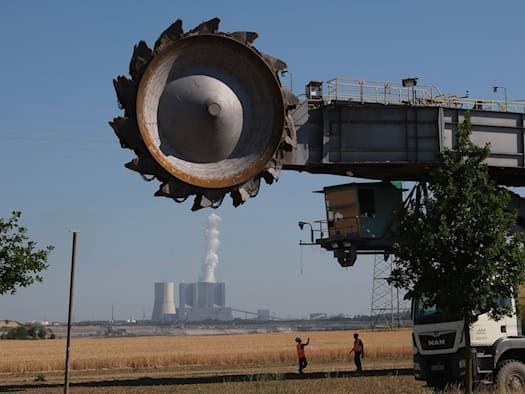
In the district of Leipzig, a lignite excavator has to be moved to a new location and cross a main road to do so. How did the complex operation work out?
The boom in balcony power plants is also continuing in Saxony. There are even more plants per 1,000 households here than the national average.
The solar module manufacturer Meyer Burger continues to fight for its future. While preliminary insolvency proceedings are already underway in Germany, the company also wants to reposition itself in the USA.
Nuclear power heats things up. This also became clear during a debate in the Saxon state parliament. The occasion was plans from the neighboring Czech Republic.
The environmental organization warns: The Leag split-up threatens to cost Saxony and Brandenburg billions. It is now calling for the two state governments to intervene.
Saxony-Anhalt is driving forward the expansion of wind power - Saxony, on the other hand, is slowing down. Hesitant politics and local resistance are hindering the energy transition there, warns an energy company.
Leipzig is expanding its photovoltaic systems on municipal roofs. Around 2,300 MWh of green electricity per year cover the needs of 1,000 households.
Launched 25 years ago, the electricity exchange in Leipzig has developed into a global player. In future, it also wants to offer a platform for trading green hydrogen.
Nothing came out of the socket for a while. Around 6,000 Mitnetz customers in the Vogtland district were affected by the outage, which lasted several hours.
From 2027, new technologies for the circular economy are to be developed in Lusatia. The foundation stone has now been laid.
At the chemical giant Dow, the crisis is now also affecting those who were about to start their careers. In Schkopau and Böhlen, the entire training year has been canceled this year.
The contract for the construction of two new nuclear power plant units is signed in Prague in a hurry and without prior notice. Despite the critics.
Electric heaters lead a niche existence in Germany, but demand is increasing. That is why a Saxon family business is expanding its production.
The solar manufacturer Meyer Burger is also fighting for survival in Germany. Despite filing for insolvency, production is set to continue - for the time being.
Meyer Burger had set out to revive solar production in Germany. However, the company has fallen into a serious crisis. Now the employees are facing an uncertain future.
Short-time working was not enough. Now the Swiss solar manufacturer Meyer Burger is pulling the emergency brake at its German subsidiaries - the end of a foreseeable development for Saxony's Minister of Economic Affairs.